Risk Monitoring System
A system for handling finance risk alerts, investigating merchant behavior changes, and managing the rules behind them. Built around analysts’ workflow Lead Product Designer Supported testing and design reviews
A system for handling finance risk alerts, investigating merchant behavior changes, and managing the rules behind them. Built around analysts’ workflow Lead Product Designer Supported testing and design reviews
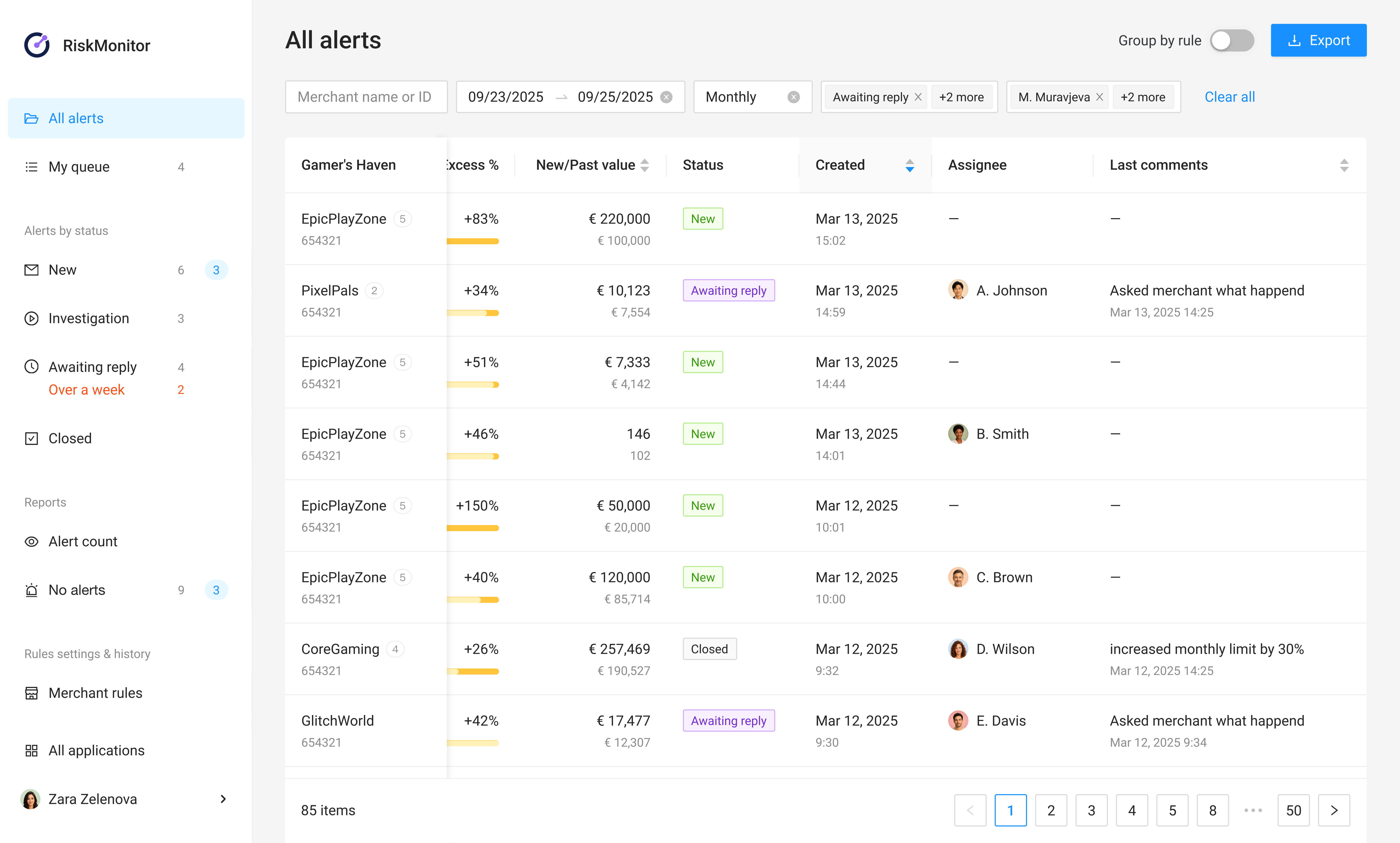
The requirements proposed structuring the main navigation by rule type, but prototype testing showed analysts started from the full alert queue, statuses, and merchants needing attention. I changed the navigation to All alerts, My queue, and status views, while keeping rule type as an optional grouping
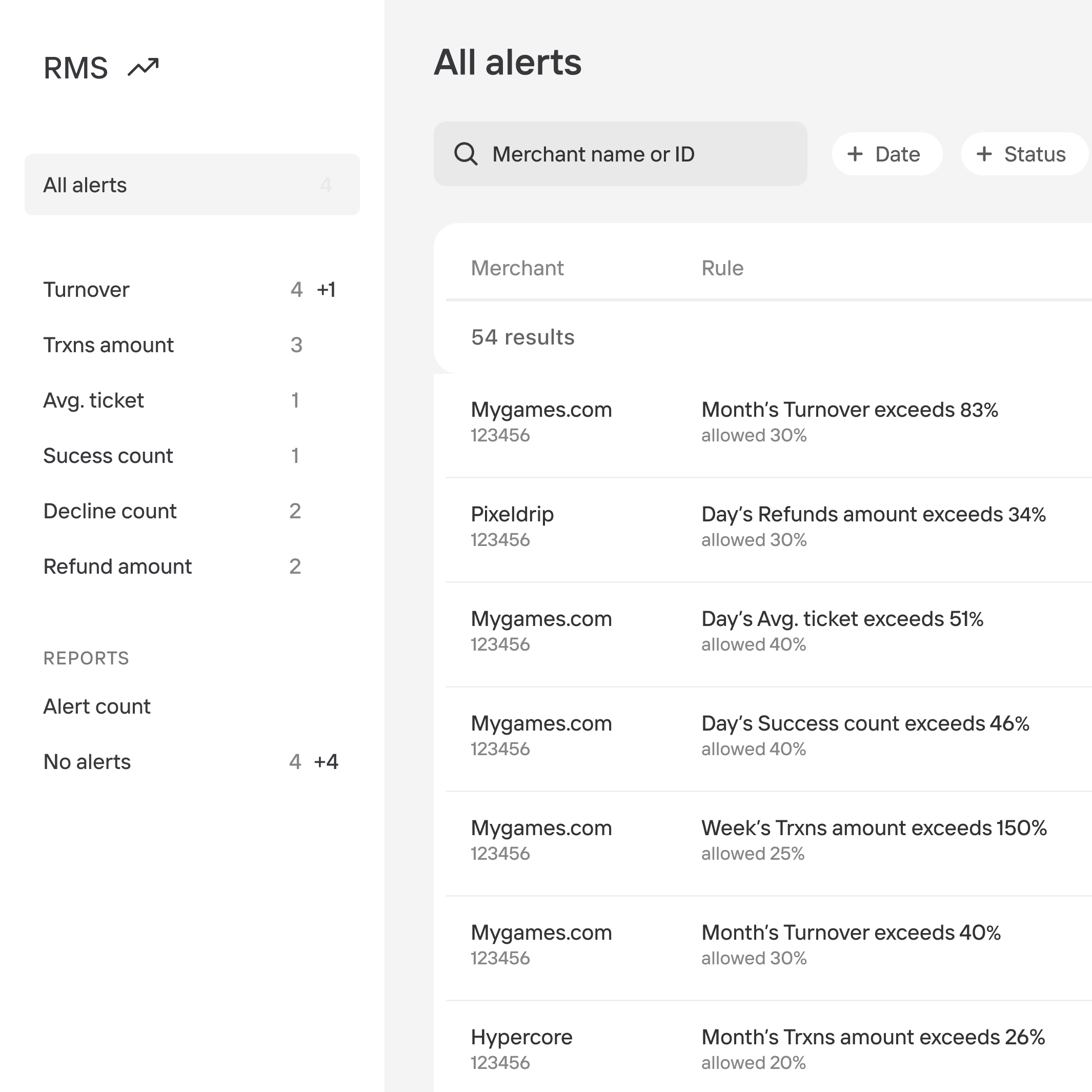
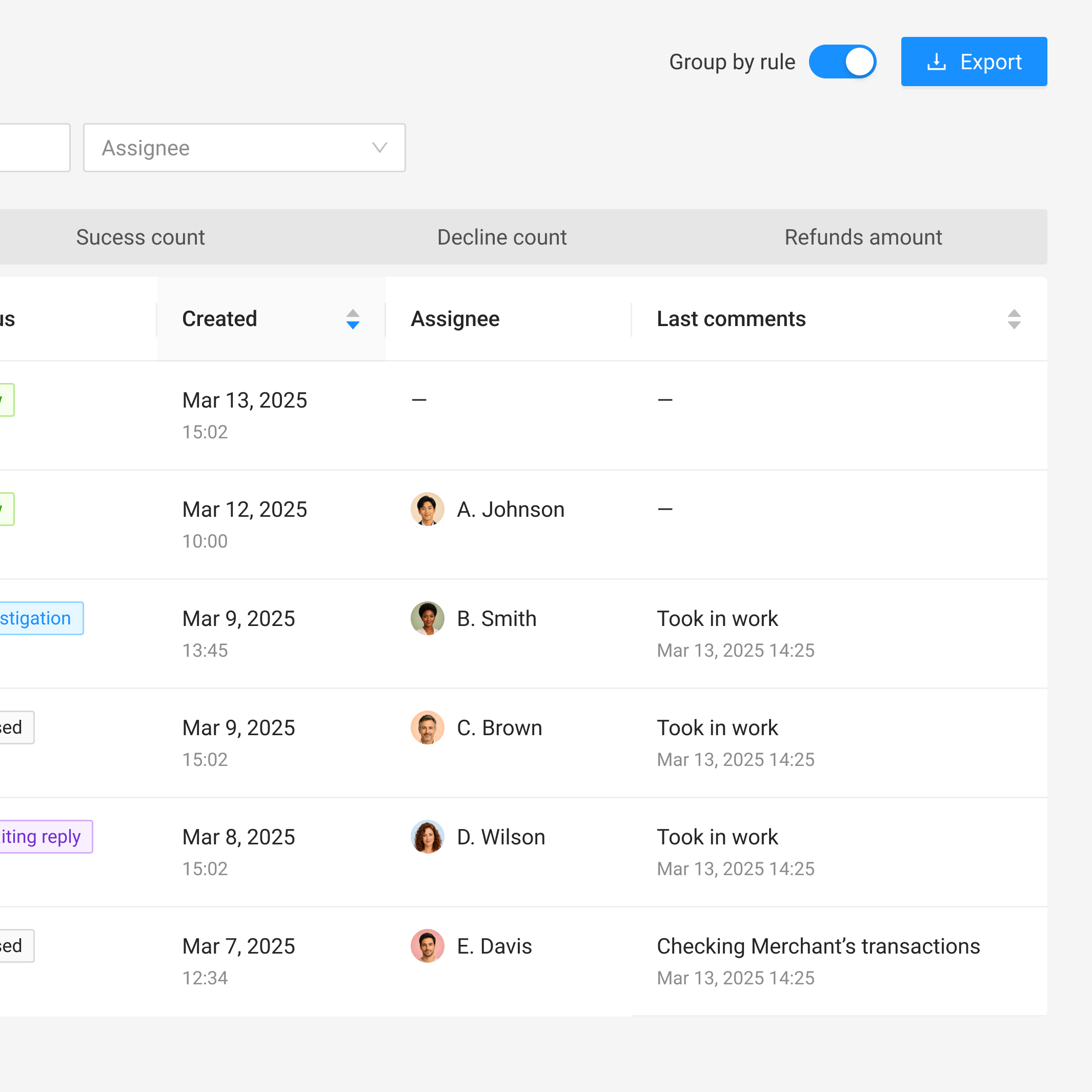
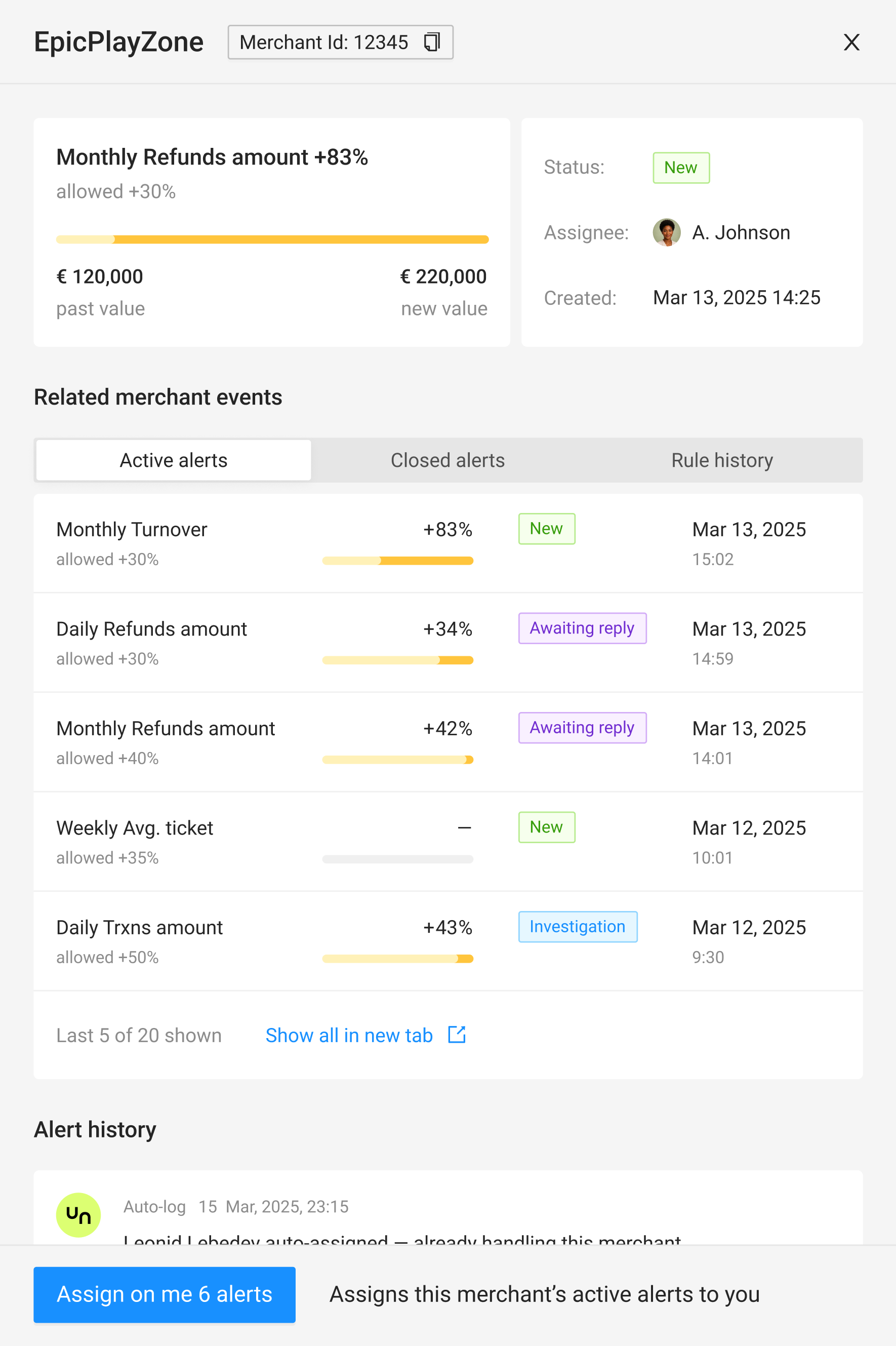
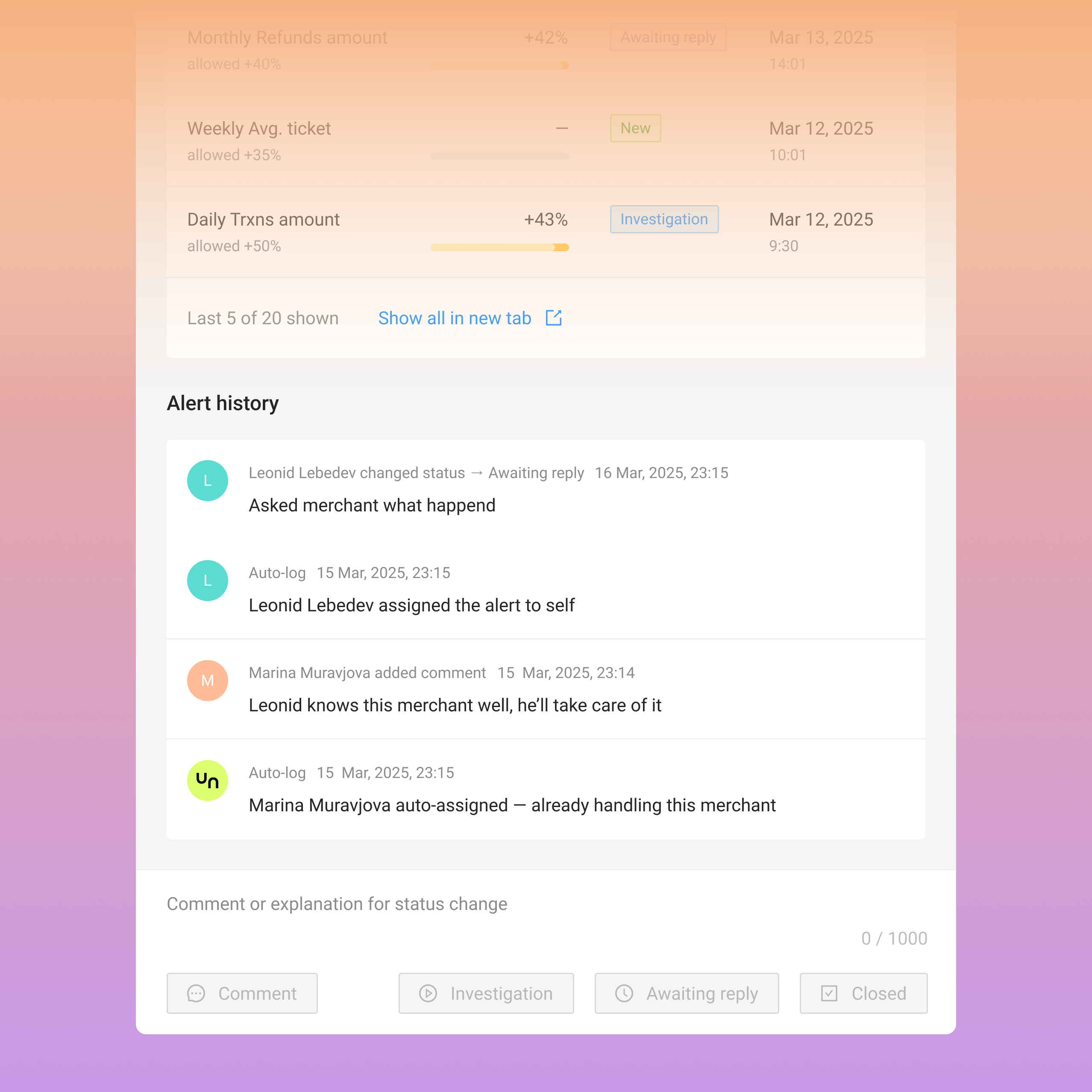
The original logic allowed different analysts to investigate alerts for the same merchant and duplicate work. The prototype exposed this gap, so we agreed to assign all the merchant’s open alerts to the analyst taking one
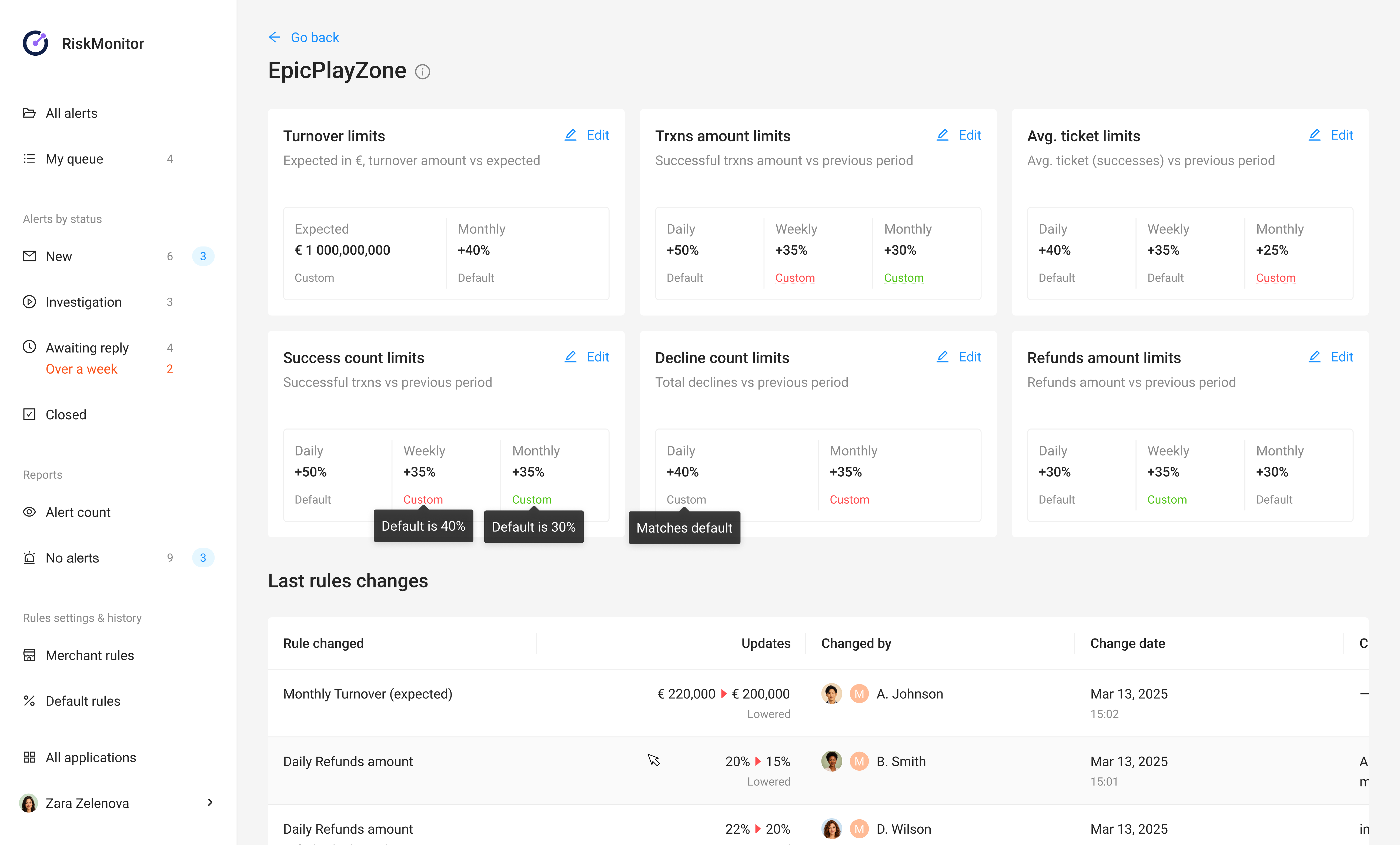
If a merchant has traffic but no expected alerts, its rules may need review. The No alerts flow groups these cases, including new merchants with no rules configured. Analysts can review the rules and their change history, update the settings, or hide the case. If nothing changes, the case returns in a week, so no tracking is needed
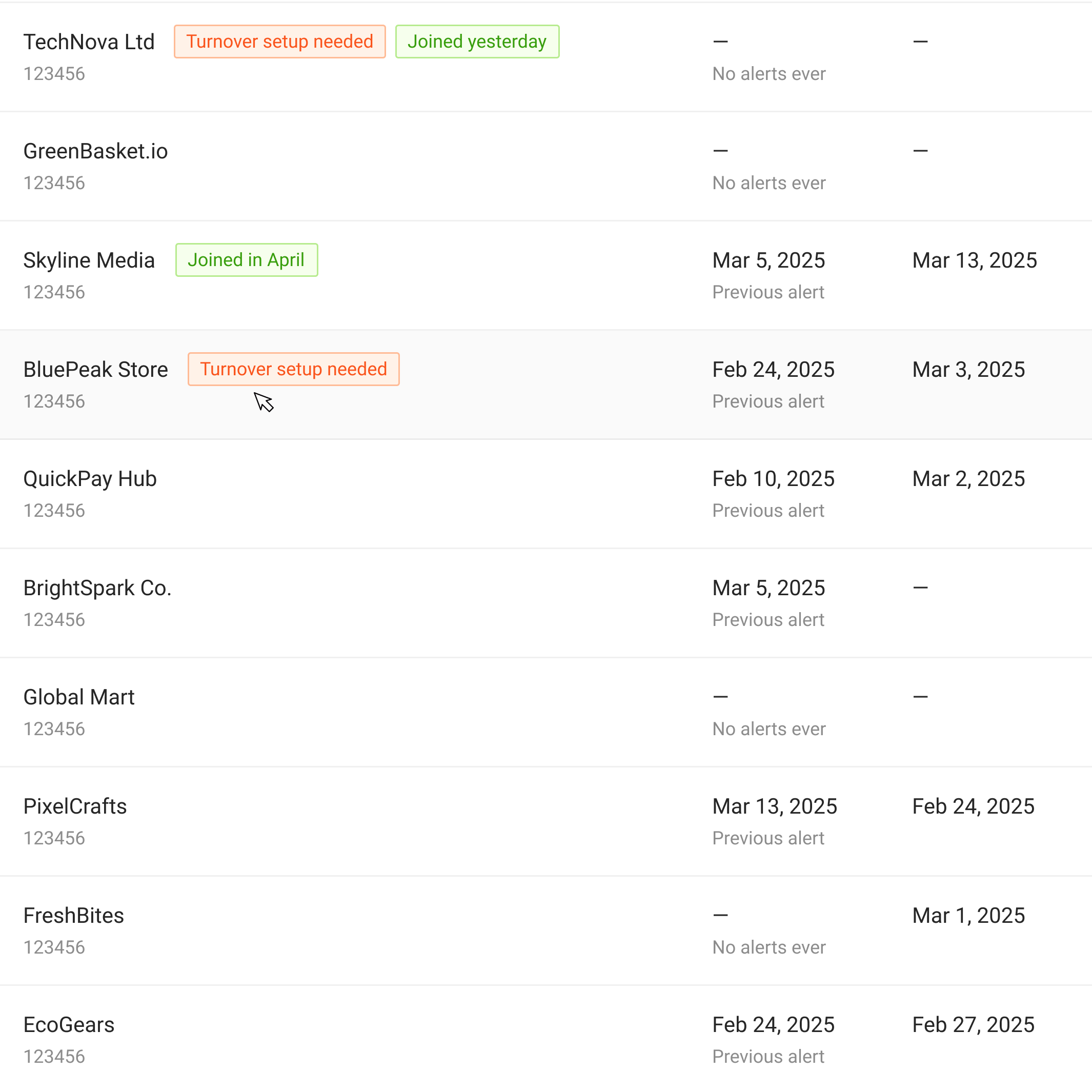
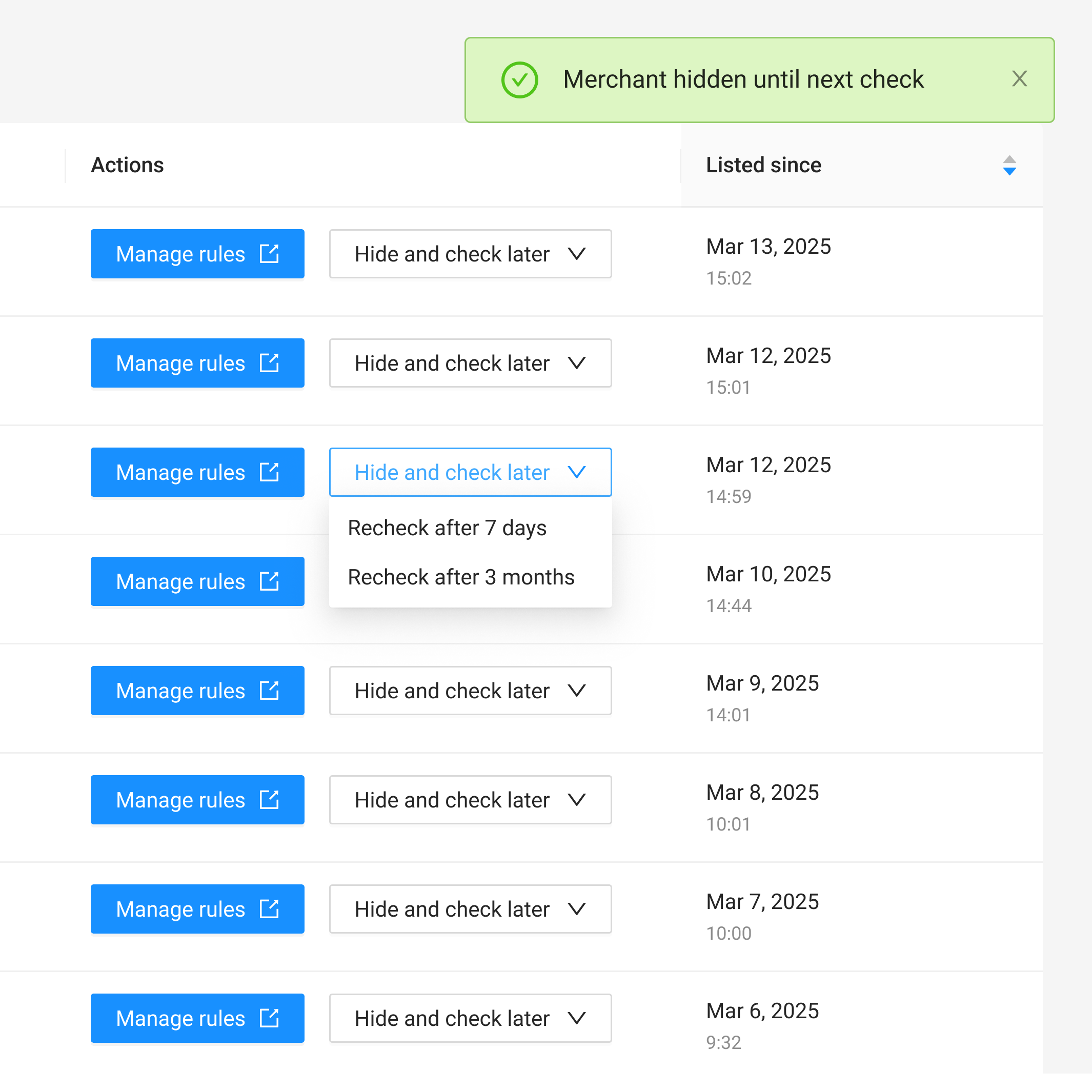
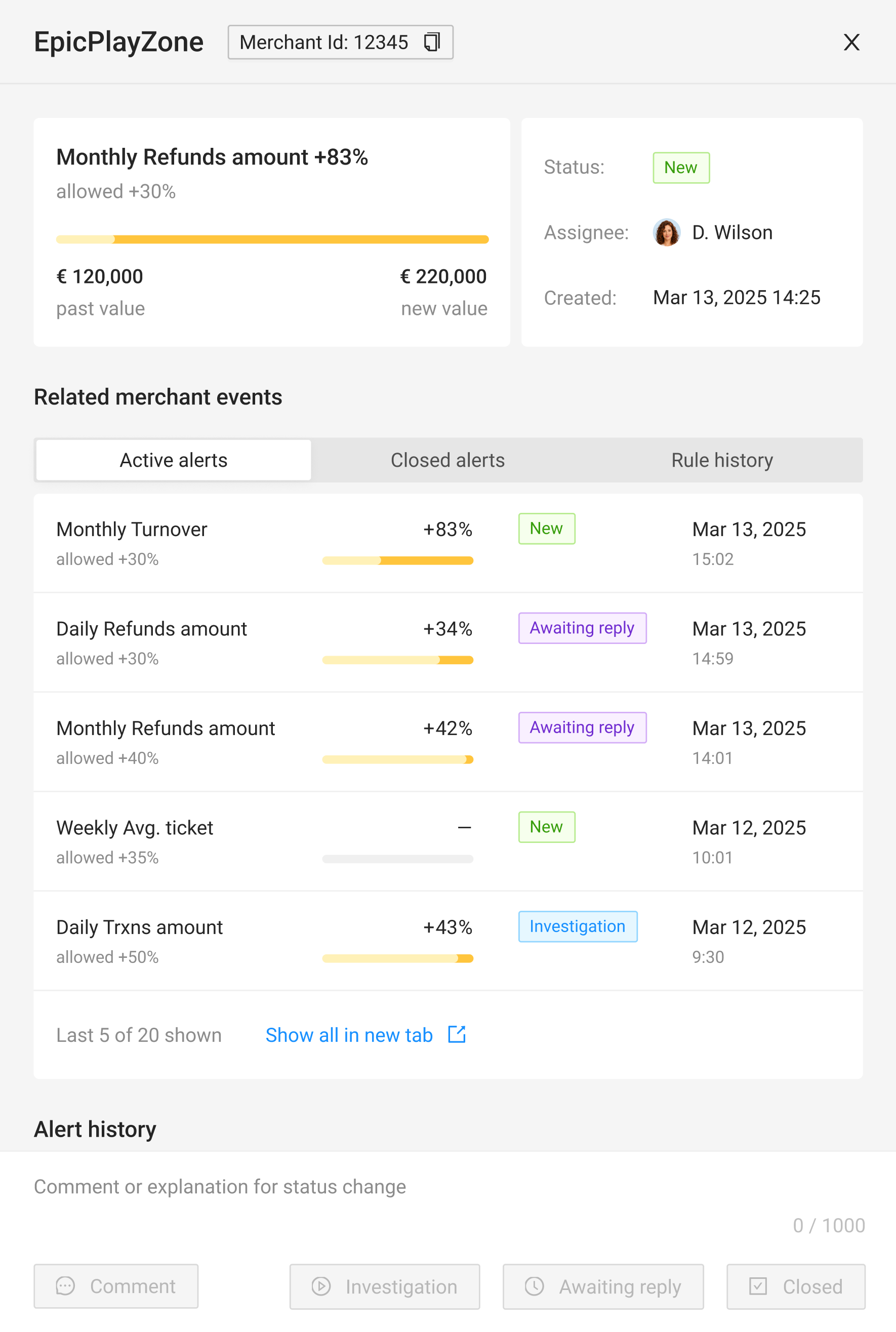
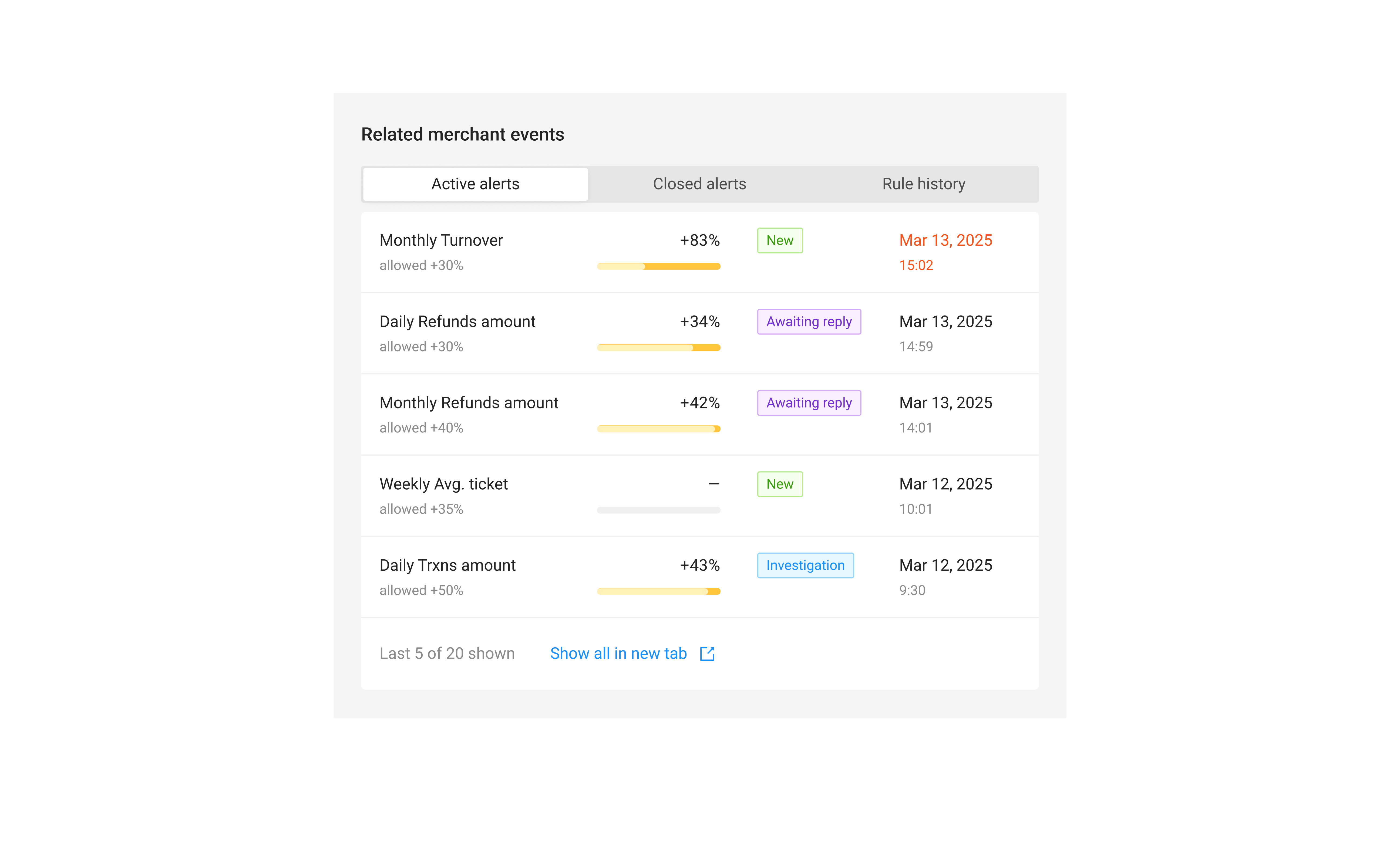
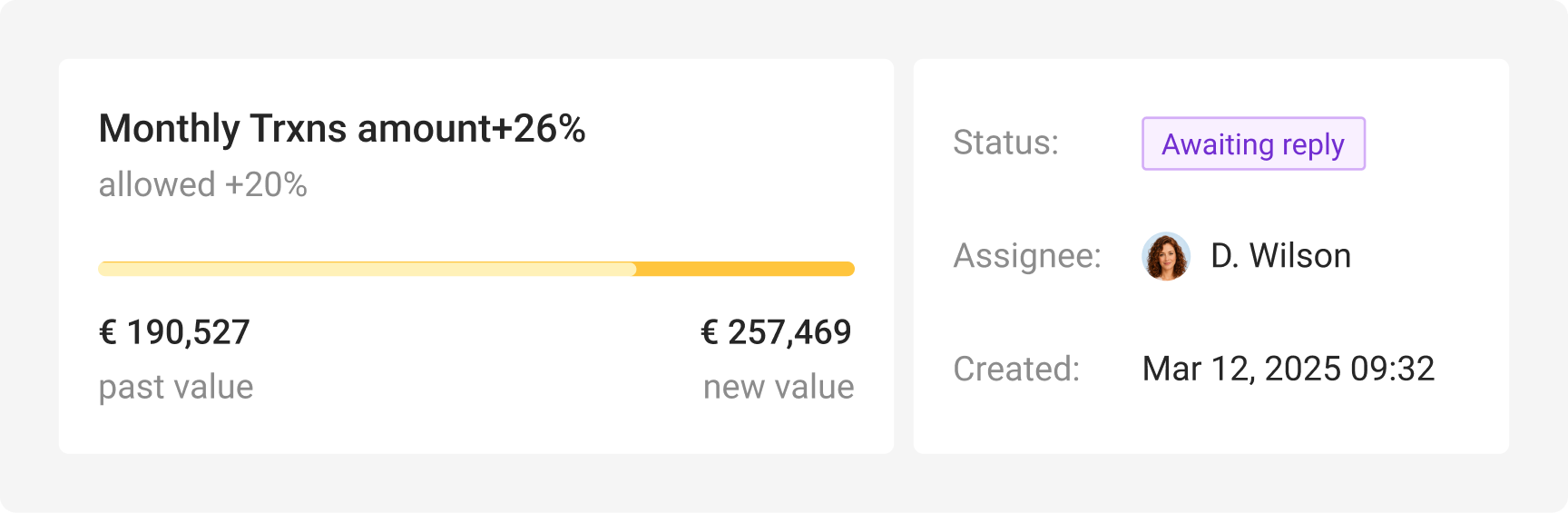
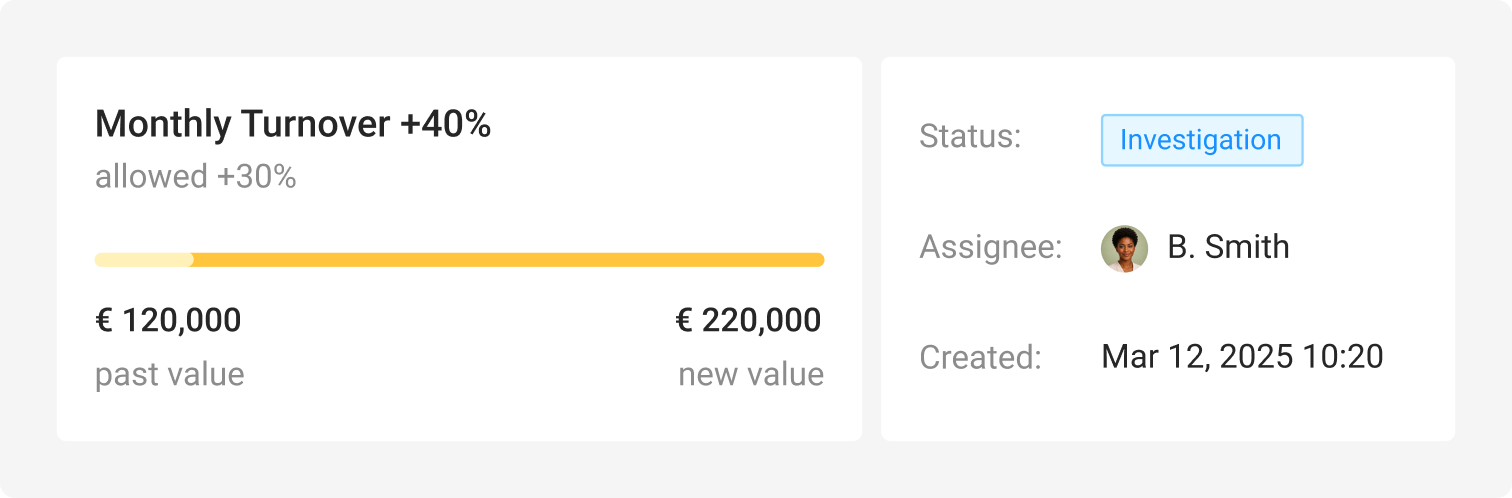
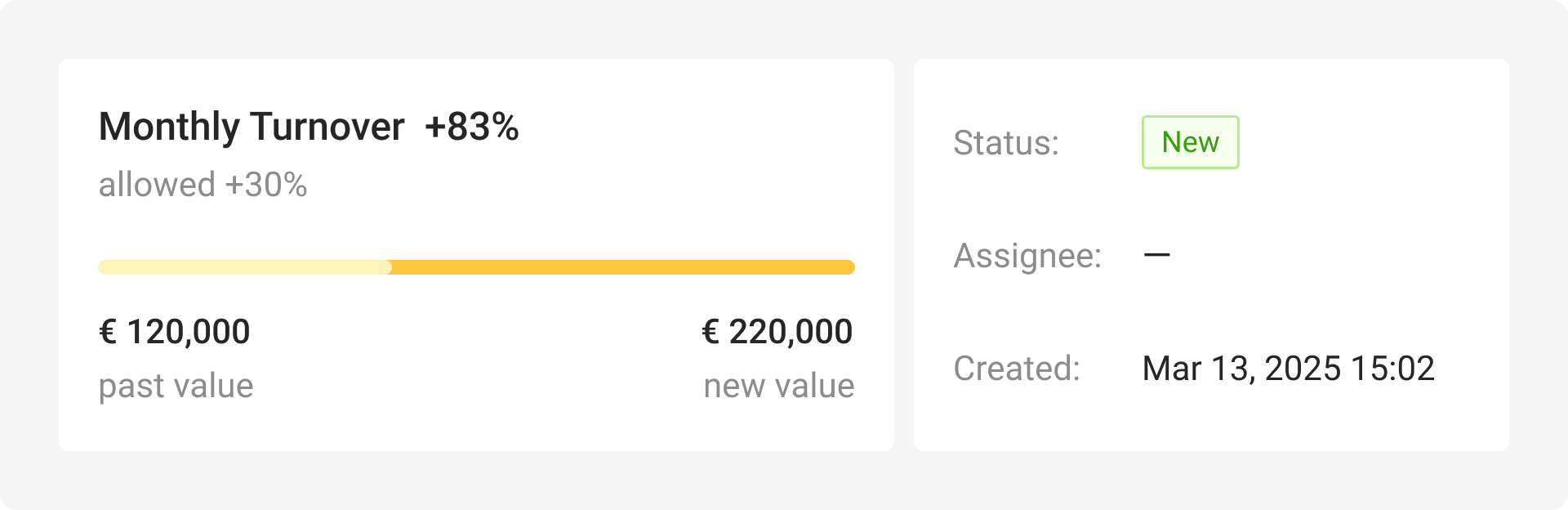
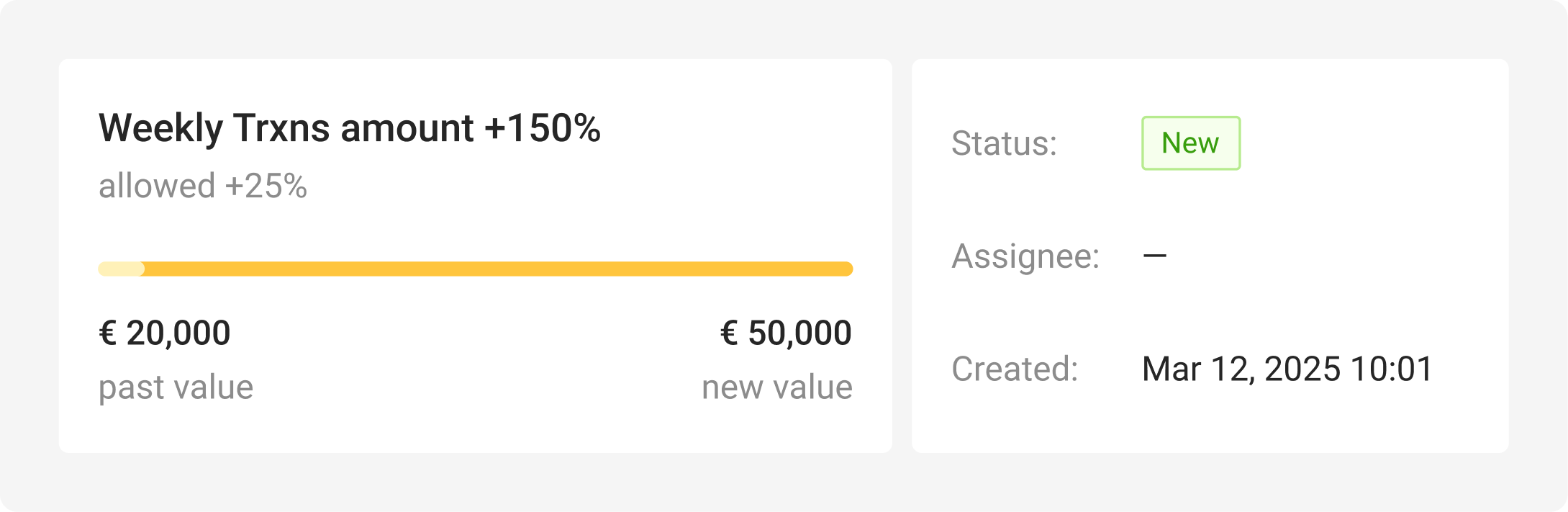
Across the system, the information needed for a decision stayed close to the action: related and historical alerts, progress against thresholds for prioritization, and merchant rule settings with default and custom values. Analysts could see what required attention, understand the merchant context, and choose the next action without piecing the case together across separate views
Working with Iana was always easy and productive. She quickly understood complex problems, asked the right questions, and turned them into clear, practical solutions. She was proactive, reliable, and thoughtful in both design decisions and collaboration
What I valued most was her ownership. She did not stop at the initial request, but looked for ways to improve the product and make the experience clearer for users. I would gladly recommend her as a strong Product Designer
 Marina, Senior Risk Analyst
This project changed how I think about internal tools. The hardest part was not designing individual screens, but understanding how analysts actually work and turning that process into a system they could rely on every day
I learned to work with incomplete requirements, test assumptions early, and make responsibilities clearer through the product itself. If I continued the project, I would focus on reducing manual investigation further by connecting more data sources and using AI to surface the most relevant context
 My reflection